




Opening your mailbox and seeing a letter from the IRS can be stressful. The most important thing you can do is read the notice and respond by the deadline. Ignoring it can result in additional penalties, interest, or collection action.
Here are some of the most common federal tax notices and what they mean.
1. CP2000 – Income Mismatch Notice
What it means:
The IRS received information (such as a W-2 or 1099) that doesn’t match what was reported on your tax return.
What to do:
• Compare the notice with your tax return.
• Review your W-2s, 1099s, and other tax documents.
• Respond by the deadline—even if you disagree.
Good to know: A CP2000 is not an audit. It is simply a proposed adjustment.
2. CP3219A – Notice of Deficiency (“90-Day Letter”)
What it means:
The IRS believes you owe additional tax after previous correspondence was not resolved.
What to do:
• Review the proposed changes carefully.
• If you disagree, this notice includes your right to petition the U.S. Tax Court.
• Do not miss the response deadline.
3. Balance Due Notices
What it means:
The IRS believes you owe taxes, penalties, or interest.
What to do:
• Pay the balance in full if possible.
• If you can’t pay, explore payment plan options.
• If you believe the amount is incorrect, respond promptly.
The Lifecycle of IRS Balance Due Notices
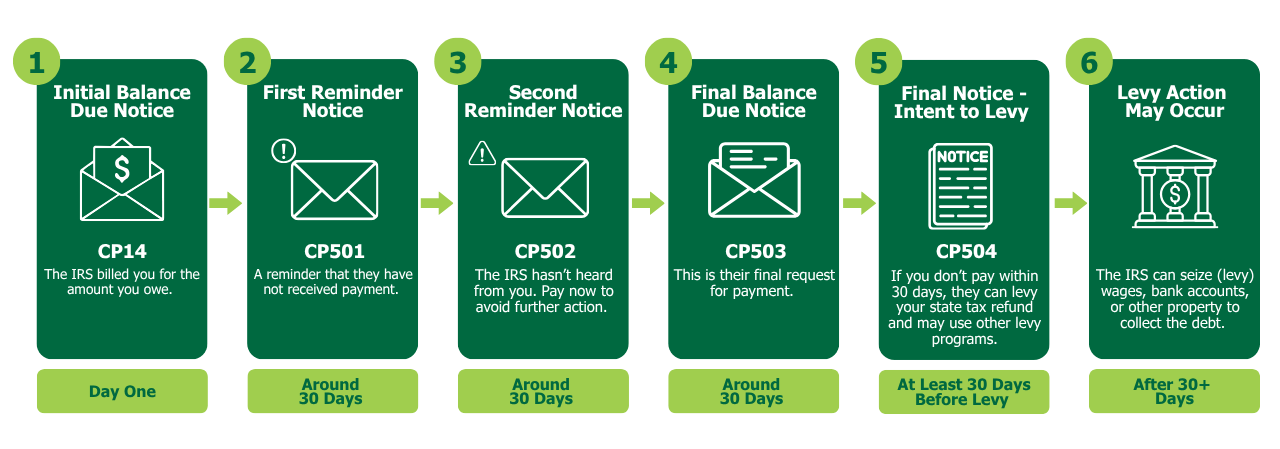
While the exact timing varies, this process often unfolds over four to five months, and penalties and interest continue to accrue throughout. Responding early—even if you can’t pay in full—can help you avoid more serious collection actions, and options such as installment agreements, Offers in Compromise, Collection Due Process hearings, or demonstrating financial hardship may delay or prevent a levy.
4. Letter 3172 Notice of Federal Tax Lien
What it means:
The IRS has filed a public claim against your property because of unpaid tax debt.
What to do:
• Review the notice carefully.
• Understand your appeal rights.
• Work toward resolving the balance to protect your financial interests.
5. CP138 – Overpayment Applied Elsewhere
What it means:
Your tax refund or overpayment was applied to another outstanding tax balance.
What to do:
• Review the notice to see where the payment was applied.
• Contact the IRS if you believe it was applied incorrectly.
6. CP165 – Returned Payment Notice
What it means:
A payment made to the IRS was returned by your bank.
What to do:
• Submit a replacement payment as soon as possible.
• Be aware that additional penalties may apply.
7. CP2100 – Incorrect Taxpayer Information
What it means:
The IRS identified incorrect taxpayer identification information submitted on certain information returns.
What to do:
• Review the information reported.
• Correct any errors promptly.
• Follow the notice instructions if backup withholding requirements apply.
8. CP2501 – Income or Deduction Discrepancy
What it means:
The IRS found information that doesn’t match your return but wants additional information before making changes.
What to do:
• Review your records.
• Provide supporting documentation.
• Respond before the deadline listed on the notice.
What Should You Do If You Receive Any IRS Notice?
✔ Open it immediately—don’t ignore it.
✔ Read every page carefully.
✔ Note the response deadline.
✔ Compare it with your tax return and supporting documents.
✔ Keep copies of everything you send.
✔ Contact a tax professional if you’re unsure how to respond.
Can You Look Up IRS Notices Online?
Yes. Many IRS notices can be researched online by entering the notice number.
To look up an IRS notice, visit:
https://www.irs.gov/individuals/understanding-your-irs-notice-or-letter
This is a great resource to help explain what each notice means, why it was issued, and the next steps you should consider.
Don’t Wait Until It’s Too Late
Many IRS problems become much more difficult—and more expensive—the longer they go unanswered. Penalties and interest continue to accrue, and unresolved balances can eventually lead to tax liens or levies.
If you’ve received an IRS notice and aren’t sure what it means, we’re here to help. Our team can review the notice, explain your options, and work with the IRS on your behalf when appropriate.
Have questions about an IRS notice? Contact our Abacus! Professionals today before responding. A quick review now could save you time, money, and unnecessary stress.